
June 2026
Contractors: Insurance Issues That Show Up When You Start Winning Bigger Jobs
As contracting businesses grow, certificates, subcontractors, commercial auto, workers compensation, tools, equipment, and audits can become more important.

For many contractors, growth does not happen all at once. First, you take on a few larger jobs. Then you add a truck. Then you rent equipment. Then a general contractor asks for specific certificate wording. Then you hire another employee. Then a commercial project requires additional insured status, waiver of subrogation, higher limits, or proof of coverage before you can start.
That is usually when insurance stops being just another expense and starts becoming part of whether you can actually take the job.
A basic policy may be enough for a small operation doing simple work. But as a contracting business grows, the insurance details become more important. The right coverage can help you satisfy contracts, protect equipment, cover vehicles properly, handle employee exposures, and avoid surprises during audits or claims.
A contractor who works alone with one truck has a different risk profile than a contractor with employees, subcontractors, rented equipment, multiple vehicles, storage yards, larger contracts, or public and commercial jobs.
Growth often means more people on job sites, more vehicles on the road, more expensive tools and equipment, more contract requirements, more certificate requests, more subcontractor exposure, more payroll, and more complex audits.
A certificate of insurance is often the first thing a contractor gets asked for before starting a job. A certificate shows evidence of insurance, including the insurance carrier, policy period, coverage types, limits, certificate holder, and sometimes special wording required by contract.
But a certificate by itself does not rewrite the policy. If a general contractor, property owner, municipality, or project manager asks for specific wording, the policy may need endorsements to actually provide what the contract requires.
Common certificate-related requests include general liability limits, commercial auto limits, workers compensation coverage, umbrella or excess liability, additional insured status, waiver of subrogation, primary and noncontributory wording, completed operations coverage, and per-project aggregate wording.
Many contracts require the contractor to name another party as an additional insured. This could be a general contractor, property owner, municipality, landlord, project owner, lender, or other party connected to the job.
Not all additional insured wording is the same. Contractors should ask whether the request applies to ongoing operations, completed operations, or both; whether primary and noncontributory wording is required; and whether the policy allows blanket additional insured status when required by written contract.
Workers compensation becomes a bigger issue once a contractor adds employees, uses subcontractors, or increases payroll. Contractors should understand how employees, officers, subcontractors, class codes, payroll estimates, and audits are handled.
Audit surprises can happen when payroll, sales, or subcontractor costs are higher than estimated. Keeping organized records, collecting certificates from subcontractors, and updating estimates during the year can help reduce problems later.
Commercial auto is not the same as personal auto. A truck used for business is not automatically handled correctly just because it has insurance.
Contractors should review how vehicles are titled, who drives them, whether employees are using them, whether trailers are involved, what the vehicles carry, where they are garaged, and how far they travel for work.
Commercial auto questions may include hired and non-owned auto coverage, driver lists, motor vehicle records, trailers, tools in vehicles, radius of operation, towing, delivery, snow removal, and physical damage coverage.
Tools and equipment may also need separate attention. A general liability policy protects against certain claims made by others, but it does not necessarily insure your own tools, equipment, rented equipment, or materials in transit.
Contractors should ask about inland marine or contractor equipment coverage for hand tools, power tools, compressors, welders, skid steers, mini excavators, trailers, lifts, rental equipment, materials in transit, equipment stored at job sites, and equipment kept in trucks overnight.
Rented equipment can create its own coverage questions. Before renting equipment, contractors should ask whether their policy covers rented equipment, whether there is a maximum limit per item, whether theft and damage are covered, whether coverage applies in transit and at the job site, and whether the rental agreement requires specific insurance.
Subcontractors can help a contractor grow quickly, but they can also create insurance issues if they are not managed properly.
A consistent subcontractor process may include written subcontractor agreements, certificates of insurance, additional insured requirements, workers compensation verification, scope-of-work clarity, safety expectations, and annual renewal of certificates.
General liability is one of the core policies for contractors, but it does not cover everything. Contractors should understand how the policy responds to bodily injury, property damage, completed operations, damage to work performed, damage to property being worked on, contractual liability, subcontracted work, and trade-specific exclusions.
Some trades have exclusions or limitations that are easy to overlook. A policy written for basic handyman work may not be appropriate for roofing, excavation, structural work, plumbing, electrical, HVAC, welding, or larger commercial jobs.
As contractors take on larger jobs, required limits often increase. A commercial job, municipal job, apartment complex, school, public entity, or general contractor may require higher limits supported by an umbrella or excess liability policy.
A contractor should consider an insurance review when adding employees, buying another truck, adding trailers, renting or buying equipment, moving into commercial jobs, signing larger contracts, hiring subcontractors, expanding into a new trade, opening a shop or yard, or seeing more certificate requests.
Before taking on larger jobs, review general liability limits, trade classification and exclusions, completed operations coverage, commercial auto, driver lists, vehicle schedules, hired and non-owned auto, workers compensation, subcontractor controls, certificates, additional insured requirements, tools and equipment coverage, rented equipment coverage, umbrella liability, and audit basis.
Contractor insurance should grow with the business. The policy that worked when you were taking small jobs may not fit once you are hiring employees, adding trucks, renting equipment, using subcontractors, or signing larger contracts.
A good insurance review should not just ask what premium is available. It should ask what kind of work you are doing now, what kind of work you are trying to win, what your contracts require, what vehicles and equipment are involved, who is on the job site, and what could stop you from getting paid or starting the job.
If your business is growing, it may be time to review your coverage before the next certificate request, renewal, rental agreement, or audit creates a problem.
Keep reading
Other blog posts
June 2026
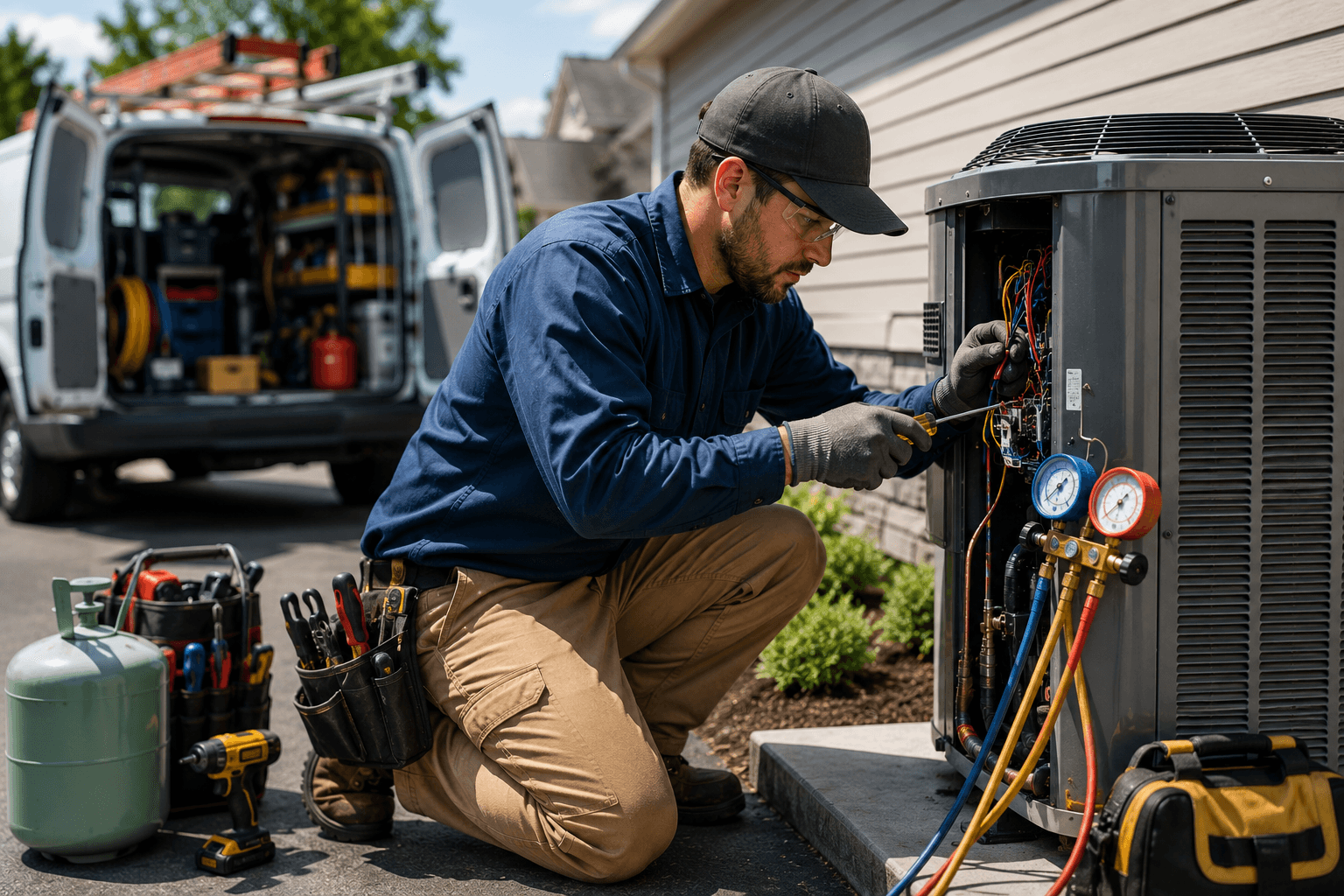
HVAC Contractors: Workers Compensation, Vehicles, Tools, and Jobsite Risk
HVAC contractors face employee injury, auto, tools, equipment, refrigerant, property damage, subcontractor, and certificate issues as the business grows.

June 2026
Electricians: Why Workers Compensation Matters Even Before You Hire a Big Crew
Electricians face jobsite risks that can affect employees, owner-operators, subcontractors, vehicles, tools, contracts, and completed work.

June 2026
Buying or Building a Home? Insurance Questions to Handle Before Closing
A practical guide to homeowners insurance questions buyers should review before closing on a new or newly built home.