
June 2026
Electricians: Why Workers Compensation Matters Even Before You Hire a Big Crew
Electricians face jobsite risks that can affect employees, owner-operators, subcontractors, vehicles, tools, contracts, and completed work.
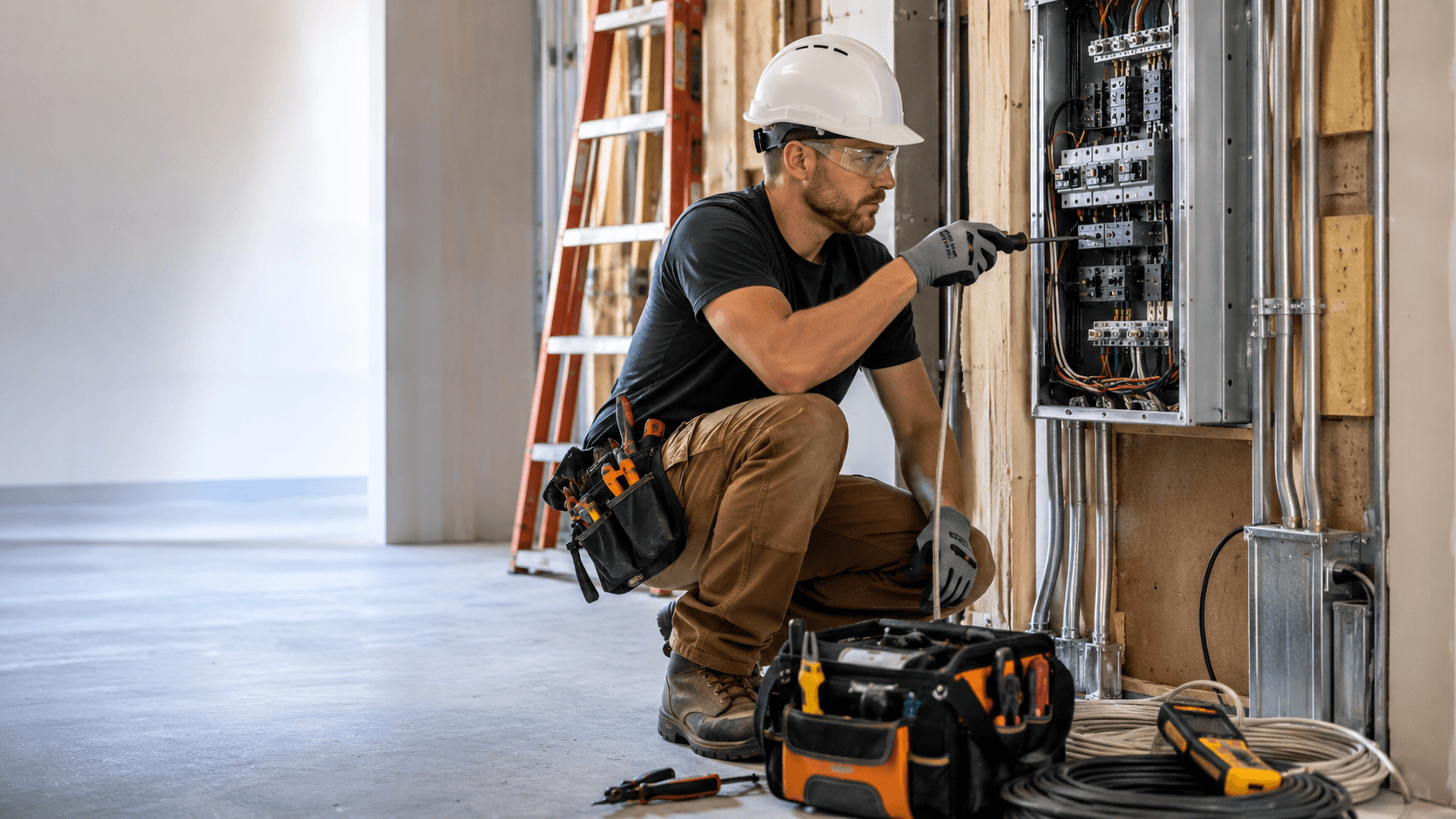
Electrical contractors often start small. One owner, one truck, a few tools, and a reputation for getting work done. At that stage, insurance may feel simple. But electrical work carries risks that can become serious very quickly, even for a small operation.
A shock, fall, burn, ladder injury, vehicle accident, tool theft, wiring mistake, fire claim, or certificate request can turn insurance from a background expense into a business issue.
For electricians, workers compensation is one of the first coverages worth understanding. The work is physical, jobsite conditions change constantly, and injuries can happen even when the contractor is careful.
Workers compensation generally helps respond when an employee is injured in the course of work. Depending on the policy and state law, it may help with medical costs, lost wages, rehabilitation, and other benefits required by workers compensation law.
For an electrician with employees, workers compensation is not just about compliance. It can also help protect the business from a claim that would otherwise be difficult to absorb out of pocket.
Owner-operators should still ask questions even if they do not have employees. Depending on state rules, business structure, and carrier guidelines, an owner may be included, excluded, or treated differently than an employee.
A solo electrician may assume, 'I do not have employees, so workers comp does not matter.' But some general contractors, property managers, builders, municipalities, or commercial clients may still ask for proof of workers compensation before allowing work to begin.
That creates a practical issue. Even when coverage is not legally required for the owner alone, it may be contractually required by the customer or project.
Electricians who use subcontractors should be especially careful. If a subcontractor does not carry their own insurance, the hiring contractor may face problems during an audit or after a claim.
A good subcontractor process may include written agreements, certificates of insurance, verification of workers compensation, additional insured requirements when appropriate, and annual certificate renewal.
Workers compensation premiums are often affected by payroll, class codes, owner inclusion or exclusion, subcontractor costs, claims history, and the type of work being performed.
That means recordkeeping matters. If payroll estimates are too low, subcontractor records are missing, or employees are classified incorrectly, the audit can create a surprise bill.
Workers compensation is only one part of the insurance picture. Electricians should also review general liability, commercial auto, tools and equipment coverage, installation coverage, umbrella liability, and any contract-specific requirements.
General liability is important because electrical work can create bodily injury and property damage exposures. A wiring mistake, damaged customer property, fire allegation, completed work issue, or injury to a third party can become a liability claim.
Commercial auto should be reviewed when vehicles are used for work. A personal auto policy may not be the right fit for a truck or van used to haul tools, visit jobsites, transport materials, or let employees drive.
Tools and equipment may need separate coverage. General liability usually does not insure your own tools, testers, ladders, wire, materials, generators, or equipment stored in a vehicle or at a jobsite.
Electricians should ask whether inland marine or contractor equipment coverage applies to hand tools, specialty testing equipment, materials in transit, tools kept in a van overnight, rented equipment, and equipment stored away from the main business location.
Larger jobs can also bring certificate requirements. A project may require certain liability limits, additional insured status, waiver of subrogation, primary and noncontributory wording, umbrella coverage, or proof of workers compensation before work starts.
The time to review these requirements is before signing the contract, not after the certificate request delays the job.
Electricians should consider an insurance review when adding employees, using subcontractors, buying another vehicle, moving into commercial work, bidding larger jobs, signing contracts with insurance requirements, buying expensive tools, or seeing more certificate requests.
A useful review should ask what kind of electrical work is being performed, who is doing the work, where the work is done, what vehicles and tools are involved, whether subcontractors are used, and what contracts require.
Electrical work has real risk even when the business is small. The right insurance program should help protect the contractor, satisfy job requirements, and grow with the business instead of creating problems after the work is already underway.
Keep reading
Other blog posts
June 2026
HVAC Contractors: Workers Compensation, Vehicles, Tools, and Jobsite Risk
HVAC contractors face employee injury, auto, tools, equipment, refrigerant, property damage, subcontractor, and certificate issues as the business grows.

June 2026
Contractors: Insurance Issues That Show Up When You Start Winning Bigger Jobs
As contracting businesses grow, certificates, subcontractors, commercial auto, workers compensation, tools, equipment, and audits can become more important.

June 2026
Buying or Building a Home? Insurance Questions to Handle Before Closing
A practical guide to homeowners insurance questions buyers should review before closing on a new or newly built home.